
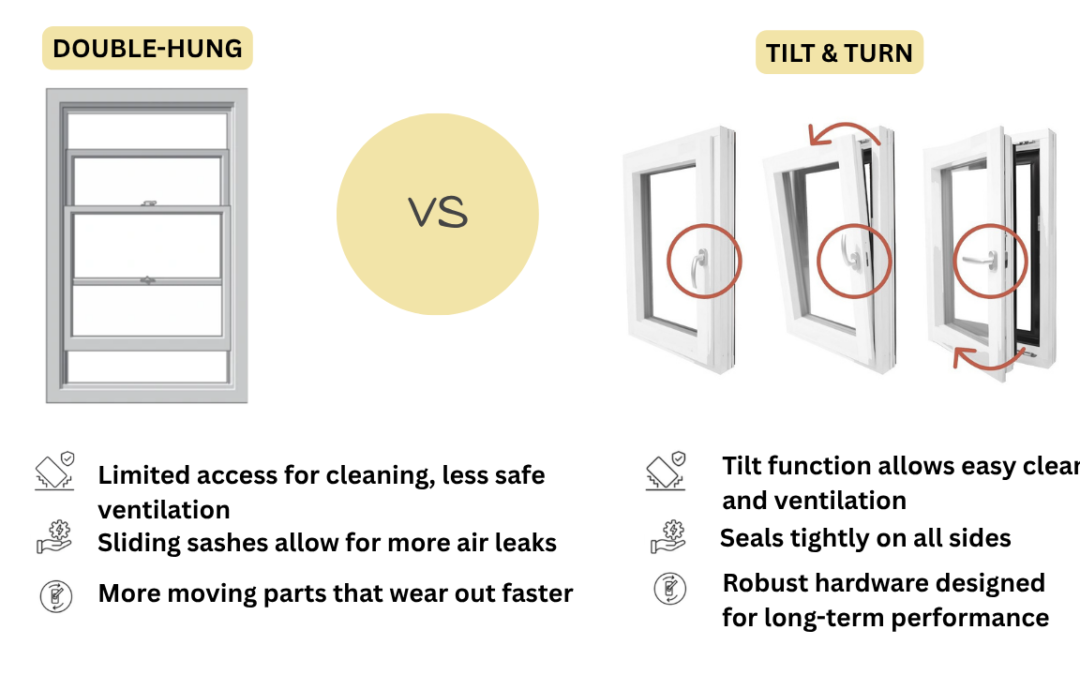
When choosing new windows, many homeowners compare tilt & turn windows with traditional double-hung windows. While both serve the same purpose, their performance and functionality are different.
Here’s a simple breakdown of the key differences:
Air Leakage (Energy Efficiency)
Tilt & Turn Windows:
Designed with a multi-point locking system that seals tightly on all sides. This creates an almost airtight fit, reducing drafts and improving energy efficiency.
Double Hung Windows:
Have sliding sashes, which naturally allow more air infiltration over time. Even high-quality models tend to leak more air compared to tilt & turn systems.
👉 Winner: Tilt & Turn – better seal, better efficiency
Cleaning & Maintenance
Tilt & Turn Windows:
Open inward, allowing you to clean both sides of the glass from inside your home. The tilt function also allows safe ventilation without fully opening the window.
Double Hung Windows:
Some models tilt inward for cleaning, but access can still be limited and less convenient, especially on upper floors.
👉 Winner: Tilt & Turn – easier and safer to clean
Lifespan & Durability
Tilt & Turn Windows:
Built with robust hardware and designed for long-term performance. The compression seal system reduces wear over time.
Double Hung Windows:
More moving parts (springs, tracks) can wear out faster, leading to reduced performance and more maintenance.
👉 Winner: Tilt & Turn – longer lifespan and consistent performance
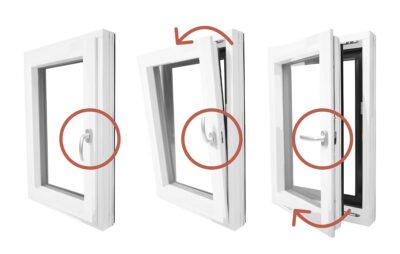
If you’re looking for energy efficiency, easier maintenance, and long-term durability, tilt & turn windows are a clear upgrade over traditional double-hung windows.
While double-hung windows are common in the U.S., more homeowners are switching to European tilt & turn systems for their superior performance and modern functionality.
If you’re considering upgrading your windows, choosing the right system can make a lasting difference in comfort, energy savings, and overall home value.